
Question : Slums and squatter settlements.
(1994)
Answer : A slum denotes a residential area where the dwellings by reason of dilapidation, over crowding , faulty arrangement of design, lack of ventilation, light and sanitary facilities or any combination of factors are detrimental to safety, health and morals. According to the estimates of Town and Country Planning Organization, about 21.2% of India's urban population lives in slums. This proportion is even higher in metropolitan cities like Kolkata, Mumbai, etc.
The origin and development of slums ....
Question : Critically examine the theories on population migration.
(2015)
Answer : Theories on population migration primarily were based on the rational economic considerations. They considered that it is pull and push factors that determine the population migration.
Pull factor of city, bigger regions attract population from the nearby areas which are relativelyunder developed and has less number of economic opportunities.
Similarly push factor determines the less economic prosperity of the place of origin of migration.
These are the dominant theorieswith underlying assumption that migrationis primarilystimulated by rational economic considerations ....
Question : ‘Marx’s view on population is more humanistic.’ Comment.
(2015)
Answer : Marxistview on population was based on the basic assumption of society being divided into haves and ‘have nots’ Also, it was in the backdrop of ill effects of capitalistic approach which was based on concentration of wealth in few hands.
Thus, the fundamental basis was also humanistic.
Now, the ‘haves’ and ‘have nots’ have different approach towards population. It is the have nots who in order to earn more, to fulfill the basic necessitiestend to multiply their ....
Question : “Cultural regions are the most suited units to study the diversity of an area” Comment.
(2015)
Answer : Man—environment relationship in the geographical studies have been into various phases like determinism, possibilism, neo-determinsim, cultural determinism etc.
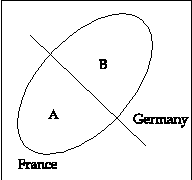
All these debates have been on man influencing environment, environment determining man’s cause of action. Thereby, regional geography is dealing with the kind of cultural regions which focuses on the cultural aspects of human on the face of earth.
In the geographical studies, cultural regions have been ....
Question : “Food productivity with purity of the ecosystem is the need of the hour.” Elaborate.
(2014)
Answer : A triple challenge: the interlinked and intensifying problems of climate change, ecosystem services degradation, and the need to double food production to sustain a growing global population describes the dominant influence of food production on ecosystems and the associated risk of ecosystems reaching tipping points beyond which they lose the ability to provide people with food and other vital services. It then offers two approaches to help conserve ecosystem services in a changing climate - ....
Question : Give an account of food security issues in developing countries.
(2014)
Answer : Food security is achieved “when all people at all times have physical and economic access to sufficient, safe and nutritious food for a healthy and active life”
The components of food security are:
The availability of food, or the amount of food that actually exists (local production and other sources);
Question : Explain the parameters for assessment and the spatial pattern of Human Development Index in the world.
(2013)
Answer : The Human Development Report introduced a new way of measuring development by combining indicators of life expectancy, educational attainment and income into a composite human development index, the HDI. The breakthrough for the HDI was the creation of a single statistic which was to serve as a frame of reference for both social and economic development. The HDI sets a minimum and a maximum for each dimension, called goalposts, and then shows where each country ....
Question : What is Geriatrics? What are the problems associated with Geriatric population?
(2013)
Answer : Geriatrics or geriatric medicine is a sub-specialty of internal medicine and family medicine that focuses on health care of elderly people. It aims to promote health by preventing and treating diseases and disabilities in older adults. It requires an interdisciplinary approach in which geriatrician or geriatric physician work with other physicians, nurses, social workers, occupational therapists and family members in order to provide comprehensive care for these patients with multiple needs.
The elderly people suffer from ....
Question : Relevance of distance decay principle in Indian cities.
(2012)
Question : Status of infant mortality rate in the world.
(2012)
Answer : Infant mortality rate (IMR) refers to death of infants less than one year per 1000 population. IMR varies according to regions and country. On one side, IMR is very low in developed and industrialized countries due to high hygienic conditions and health facilities. On the other side, it is a big concern for developing and LDC countries. There is problem of malnutrition in poor countries like Ethiopia, Chad, Afghanistan and developing countries like India.
Lower standard ....
Question : Similarities in the population distribution of southern continents and reasons for the same.
(2012)
Answer : World population is not distributed uniformly. Southern continents of Gondwanaland do have similarity in population distribution due to physical, economic, political and social factors.
High population density is found in river valleys and plain regions. Distribution of agricultural land also impacts the population distribution.
The desert region and equatorial region are sparsely populated. Mountainous regions are also sparsely populated. Places with ease of trade and transport are heavily populated such as Jakarta, Sydney, Brasilia, and Johannesburg. Downs ....
Question : Impact of migration on urban demography.
(2012)
Answer : Immigration and emigration both affects the society, economy, environment and demography. These effects could be positive as well negative. Migration causes numerical as well as qualitative changes in population and demographie structure of the place of origin as well as the destination. Generally, people migrate from dense areas to low density region having more resources.In other words, there is reorganization of human resources for achieving balance with physical resources. This transfer of people from one ....
Question : ‘Though 70% of Indian population is rural, urban planning is crucial to the development of India’. Discuss
(2012)
Answer : Urban planning refers to that planned process in which future problems are also dealt with along with solution of present problems of urban areas. Urban planning gives broad based tool for urban development so that an urban area achieves all round development in social, economic and cultural fields and solving its problems.
Increased urbanization and industrialization has attracted a large portion of rural population which has created extra pressure on urban facilities and caused social and ....
Question : Evaluate the various models on population density distribution in urban centres.
(2012)
Answer : Population density is measured as a ratio of population size to the concerned area. Objective of such measurement is to analyze the population pressure on resources of that region.
Geographers have developed different models for population density. These models have different names for population density such as numerical density, nutritional density, agricultural density, economic density, etc. Trewartha has given 3 types of population density:
1. Numerical and general density - it is simply a ratio of total ....
Question : Impact of changing fertility ratio on world population distribution.
(2012)
Answer : Fertility ratio measures number of children that can be produced by a female in her reproductive age. The world average is 2.8. Fertility ratio of developed countries is 1.6 whereas developing countries have 3.1 fertility ratio. Many countries in Europe have reached the last stage of demographic transition. Countries like Germany, Russia, and New Zealand are having negative growth rate.
USA, Central and South America, North Africa, Uzbekistan, Kazakhstan, Mangolia, and China, have their fertility ratio ....
Question : Regional shifts in the world urbanization after 1950 and the varied characteristics of urban process.
(2012)
Answer : World had only 29% population in urban areas in 1950 but this share of urban areas increased to 45% in 1995. This rapid growth in urbanization is attributed to developing countries rather than developed. The main reason for rapid urbanization is rapid natural population growth and rural to urban migration in developing countries. Urbanization is high in continents like Europe (74%), Oceania (72%), North America (68%), South America (79%) whereas it is 35% in Africa ....
Question : Elaborate the concepts of megalopolis and discuss the characteristics and problems related to two such regions selecting one each from North America.
(2009)
Answer : Jean Gattmann was the first person who used the term megalopolis for eastern coastal areas of United Sates of America extending from Boston to Washington. Megalopolis is a very large and spreading under complex which enlarged to such an extent that they have become linked together. According to Jean Gattmann the population of megalopolis is over 35 million. The results of this type of agglomeration can be seen around the capital cities such as London, ....
Question : Discuss the social and economic theories of population growth.
(2008)
Answer : The study of the population and its various aspects has a great significance. It reflects the contemporary socio economic, cultural, and technological stage of any society. It acts as the foundation based on which the planning, whether at the regional or at the national level is done. Though so critical, it is quite challenging to do any concrete and systematic theory formulation on it. It is perhaps because of this reason that different scholars have ....
Question : Delineation of Urban fringe.
(2007)
Answer : The term rural-urban fringe has been used to designate a zone of discontinuity between city and country in which rural and urban land-uses are mixed. The absence of a clear break between rural and urban conditions is a feature of the modern city. The rural-urban fringe can be viewed as an area of invasion in which population density is increasing rapidly and land values are rising.
Rural-urban fringe has been a characteristic feature of western cities, ....
Question : Concept of primate city
(2005)
Answer : One of the earliest generalizations concerning the size distribution of cities is the concept of primate city given by M.Jefferson in 1939.
According to him, the primate city is a country’s leading city and is several times larger than the second ranking city. He believed that once a city is larger than the other it gets an advantage over the other cities to grow more rapidly with the help of large scale in-migration & it becomes ....
Question : Bring out the contrast between the internal structure of the pre-industrial and industrial cities.
(1999)
Answer : G. Sjoberg in the his book 'The pre-Industrial City' has attempted to examine the structure of urban settlements both in Europe and elsewhere in the world prior to the impact of large scale industrialisation. In his work he has made generalisations about the form of society and urbanisation before the modern era. His pre-industrial city represents a stage in the evolution of the city, mainly the western one.
Pre-industrial cities are product of their societies and ....
Question : Discuss the major international streams of migration in the world in recent times and account for the relationship that exists between population pressure areas and migration prospects.
(1995)
Answer : Migration may be interpreted as spontaneous effort to achieve a better balance between population and resources. It is defined as a movement of population involving a change of permanent residence of substantial duration. It is a sensitive index of geographical analysis of population change and changing pattern of economic opportunities in any area.
Push Pull Theory: Last 50 years or so have seen a considerable degree of international migrations. Generally speaking inequalities of one kind or ....
