
Wetlands
A wetland is a land area that is saturated with water, either permanently or seasonally, such that it takes on the characteristics of a distinct ecosystem. Specifically, wetlands are characterized as having a water table that stands at or near the land surface for a long enough period each year to support aquatic plants. The primary factor that distinguishes wetlands from other land forms or water bodies is the characteristic vegetation of aquatic plants, adapted to the unique hydric soil.
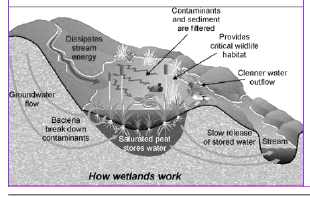
Key Facts:
- Wetlands occur naturally on every continent except Antarctica, the largest includes ....
Do You Want to Read More?
Subscribe Now
Take Annual Subscription and get the following Advantage
The annual members of the Civil Services Chronicle can read the monthly content of the magazine as well as the Chronicle magazine archives.
Readers can study all the material before the last six months of the Civil Services Chronicle monthly issue in the form of Chronicle magazine archives.
Related Content
- 1 India’s Current Achievements in Renewable Energy
- 2 Heat Waves: Causes, Effects and Impacts
- 3 Developing Climate Resilience in Indian Cities
- 4 Plastic Pollution in Indian Himalayan Region
- 5 Dam Management and Water Security in India
- 6 Urban Floods: Causes and Challenges of Management
- 7 Climate Change-induced Disasters: India’s Preparedness & Challenges
- 8 Fragility of Himalayan Ecosystem: Challenges of Disaster Management
- 9 India’s Groundwater Resource: Issues and Management Challenges
- 10 Desertification and Drought Resilience: Key Imperatives