
Question : Town Planning of Harappan Culture.
(2018)
Answer : The town-planning of Harappan culture is one of its most impressive aspects, as though it was the handiwork of a genius of an architect. Immaculate was the arrangement of the city. In every aspect like roads, houses, drainage, bath, granary, the Harappan people have left an imprint of originality and brilliance. The excavation undertaken in various places gives clear indication that the people of Indus valley were primarily urban people. The Indus cities whether Harappa ....
Question : Give an account of the consequences of food production of Neolithic culture.
(2018)
Answer : The term ‘Neolithic Revolution’ was introduced by V. Gordon Childe in 1936. Agricultural Revolution, or First Agricultural Revolution was the wide-scale transition of many human cultures during the Neolithic period from a lifestyle of hunting and gathering to one of agriculture and settlement, making an increasingly larger population possible. The Neolithic revolution led to several changes in human societies which include the creation of cities and permanent dwellings, food storage and granaries, pottery making, labour ....
Question : What do you understand by the National Character Study? Illustrate the concept.
(2018)
Answer : The term “national character” is used to describe the enduring personality characteristics and unique lifestyles found among the populations of particular national states. This behaviour is sometimes considered on an abstract level, that is, as cultural behaviour without actual reference to necessarily different personality modalities. It may also be considered as being motivated by underlying psychological mechanisms characteristic of a given people.
Question : Explain the biological changes that made human beings capable of making culture.
(2018)
Answer : Anatomically, the evolution of bipedalism has been accompanied by a large number of skeletal changes, not just to the legs and pelvis, but also to the vertebral column, feet and ankles, and skull. The femur evolved into a slightly more angular position to move the centre of gravity toward the geometric centre of the body. The knee and ankle joints became increasingly robust to better support increased weight.
Question : Advanced Molecular Anthropology Techniques.
(2018)
Answer : Anthropology is the study of the origin and development of the human species. Molecular anthropology uses the tools and techniques of molecular genetics to answer anthropological questions, especially those concerning the origins and spread of humans across the globe.
These questions mainly fall under the heading of physical or biological anthropology, as opposed to cultural anthropology, which studies social relationships, rituals, and other aspects of culture.
Molecular anthropology uses molecular genetic methods to address questions and issues ....
Question : Gordon Childe’s Theory of Cultural Evolution.
(2018)
Answer : Evolution is a continuous process in which different forms (species, society, institutions, etc.) are produced or developed orderly in a system. While studying evolution of culture among mankind, anthropologists adopted following two theoretical approaches to study cultural evolution:
Gordon Childe (British school of Neo-evolutionism) described social evolution in terms of three major events (in ....
Question : Give an account of the field methods used in the study of Archaeological Anthropology.
(2018)
Answer : The various ways anthropologists conduct research in naturalistic settings, or in the field, are called field methods. They include participation in social life and various forms of observation. Anthropology relies on field methods as its ultimate source of information. Research in the field, known as fieldwork, involves collecting primary data on humans, other primates, and the objects and processes relevant to their lives. Through further examination, analysis, and comparison in library, laboratory, or office settings, ....
Question : Difference between Science and Magic.
(2018)
Answer : Explaining the relationship of science and magic some anthropologists have presented functional theories. Of these the theories of Malinowski and Radcliffe Brown are worth mentioning.
Magic and Science: Relation between these phenomena is shown by Malinowski in terms of both the similarity and difference.
Differences
Question : The Relevance of Anthropology
(2018)
Answer : Anthropology is the study of human beings across the time and places. Though the roots of Anthropology as a subject date back to 17th century, one can say that the real beginning was in 18th century with the publication of a book titled “Anthropology” by Emmanuel Kant.
Anthropology is the branch of science that studies human being from sociocultural, biological, archaeological aspects. It is a holistic science because it studies both present and past societies unlike ....
Question : Describe the culture related to Homo erectus.
(2018)
Answer : Homo erectus (literally “upright man”) is an extinct hominid that lived between 1.8 million and 50,000 years ago.
Homo erectus were very successful in creating cultural technologies that allowed them to adapt to new environmental opportunities. They were true pioneers in developing human culture and in expanding their geographic range beyond Africa to populate tropical and subtropical zones elsewhere in the Old World.
Question : What are dating methods? Discuss one absolute method and one relative method in detail.
(2017)
Answer : Dating techniques are procedures used by scientists to determine the age of a specimen. Relative dating methods tell only if one sample is older or younger than another sample; absolute dating methods provide a date in years. Archaeologists use many different techniques to determine the age of an object.
Usually, several different techniques are applied to the same object. Relative dating arranges artifacts in a chronological sequence from oldest to most recent without reference to the ....
Question : Salient features of Mesolithic culture.
(2017)
Answer : The Mesolithic Age, also known as Middle Stone Age, was the second part of the Stone Age. In India, it spanned from 9,000 B.C. to 4,000 B.C. This age is characterized by the appearance of Microliths (small bladed stone tools). The Mesolithic Age was a transitional phase between the Paleolithic Age and the Neolithic Age. The people of this age lived on hunting, fishing, and food gathering; later on they also domesticated animals. Mesolithic culture ....
Question : Critically examine the Stewardian view of Neo-evolutionism.
(2017)
Answer : In 20th century there evolved Neo-evolutionism with Leslie White, Julian Steward, Marshall Sahlins and Elman Service as main propounders.
Neo-evolutionism as a social theory attempting to explain the evolution of societies by drawing on Charles Darwin’s theory of evolution while discarding some dogmas of the previous theories of social evolutionism. Neo-evolutionism is concerned with long-term, directional, evolutionary social change and with the regular patterns of development that may be seen in unrelated, widely-separated cultures.
Neo-evolutionary theories are ....
Question : Define Anthropology. Describe the major branches of Anthropology elaborating on any one branch.
(2017)
Answer : “Man wonders over the restless sea, the flowing waters, the sight of the sky, and forgets that of all wonders, man himself is the most wonderful.” - Augustine. The study of this wonderful creature and his varied aspects is comparatively a recent endeavour and has been known as Anthropology.
Anthropology is defined as the study of humanity, our physical characteristics as animals, and our unique non-biological characteristics which we call culture. The term “Anthropology” is derived ....
Question : Bring out the comparative anatomical features of Man and Apes. Discuss their evolutionary significance.
(2017)
Answer : The ape-group is supposed to be very close to humans, in spite of vast differences of physical characters that exist between these two groups.
The comparatively minor anatomical differences between humans and apes are largely a result of our habitual bipedalism. A number of changes in our bodies were related to the evolution of this form of locomotion. Unlike apes, our arms are relatively ....
Question : Elucidate the biological and cultural factors in human evolution.
(2016)
Answer : Anthropology is now held responsible for the study of biological and cultural evolution of humans. The human behaviour is a contribution of the interaction of social, cultural and biological factors.
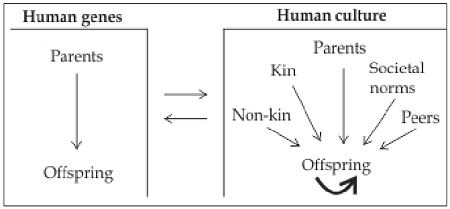
There are many sub-factors included in them such as gene-culture theory, genetic change, etc. Human evolution is related to the physical and behavioural changes happening in the life of humans. It includes the biological evolution and the cultural evolution that has happened in the life of ....
Question : Delineate the salient features of Chalcolithic cultures.
(2016)
Answer : With the end of the Neolithic Age, several cultures started using metal, mostly copper and low grade bronze. The culture based on the use of copper and stone was termed as Chalcolithic meaning stone-copper Phase. In India, it spanned around 2000 BC to 700 BC. This culture was mainly seen in Pre-Harappan phase, but at many places it extended to Post-Harappan phase too. The people were mostly rural and lived near hills and rivers. The ....
Question : Differences between social anthropology and sociology.
(2016)
Answer : Sociology and anthropology are social science disciplines that focus on studying the behaviour of humans within their societies.
Sociology and social anthropology are closely related. Social anthropology studies primitive societies directly, living among them for months or years, whereas sociological research is usually from documents and largely statistical. The social anthropologist studies society as a whole.
The sociologist’s work, on the other hand, is usually very specialized, being a study of isolated problems, such as divorce, crime, ....
Question : Write short notes of 150 words on Rhodesian Man.
(2016)
Answer : Rhodesian Man (Homo rhodesiensis) is a hominin fossil that was described from a cranium found in an iron and zinc mine in Northern Rhodesia (now Kabwe, Zambia) in 1921 by Tom Zwiglaar, a Swiss miner.
In addition to the cranium, an upper jaw from another individual, a sacrum, a tibia, and two femur fragments were also found.
The skull was dubbed Rhodesian Man at the time of the find, but is now commonly referred to as the ....
Question : Neolithic Cultures of India.
(2016)
Answer : The Neolithic Age, which means New Stone Age, was the last and third part of the Stone Age. In India, it spanned from around 7,000 B.C. to 1,000 B.C. Neolithic or New Stone Age is an Old World Chronological period, characterized by the development of agriculture leading to sedentary life.
In India it is a fairly well defined and understood period with high variations in time period ranging from 6000 BC to as early as 1500 ....
Question : Palaeolithic culture.
(2015)
Answer : The first or the oldest prehistoric culture is known as Palaeolithic or the Old Stone Age. The term comes from the Greek word ‘palaios’ means old and ‘lithos’ means stone. Therefore, palaios + lithos =Palaeolithic.
Although our knowledge regarding Palaeolithic is very meagre and imperfect, still Palaeolithic or Old Stone Age is very important as it provides a clear cut sequence of cultural development throughout the entire Pleistocene period, all over the world.
Palaeolithic Period or ....
Question : Describe the salient characteristics and geographical distribution of Homo erectus.
(2015)
Answer : Homo erectus (meaning ‘upright man’) is a species of archaic humans that lived throughout most of the Pleistocene geological epoch. Its earliest fossil evidence dates to 1.8 million years ago. Homo erectus is considered as the most probable direct ancestor to Homo sapiens and existed around 1.6 to 0 .12 million years ago on earth in regions of Africa, Europe and Asia.
Homo erectus eventually became extinct throughout its range in Africa, Europe and Asia, but ....
Question : Archaeological Anthropology.
(2015)
Answer : Archaeological Anthropology traces the origin, growth and development of culture in the past. By ‘past’ means the period before history when man had not acquired efficiencies of written language in order to record the story of his life. The archaeologist try to reconstruct the events of man’s past dating back to millions of years ago. Archaeological anthropology is one of the major sub-divisions of anthropology related to the study of prehistory and the early history ....
Question : Critically examine Darwin’s theory of evolution in understanding evolution.
(2015)
Answer : The theory of evolution by Natural Selection, first formulated in Darwin’s book “On the Origin of Species” in 1859, is the process by which organisms change over time as a result of changes in heritable physical or behavioural traits. Changes that allow an organism to better adapt to its environment will help it survive and have more offspring. In 1859 Darwin and Alfred Russel Wallace came to the same ....
Question : Describe the absolute dating methods in Archaeology, highlighting the importance of each method.
(2014)
Answer : Archaeological investigations have no meaning unless the chronological sequence of the events are reconstructed faithfully. The real meaning of history is to trace the developments in various fields of the human past. Towards this end, while investigating the past cultures, archaeology depends on various dating methods. These dating methods can broadly be divided into two categories, i.e.
Relative Dating Methods: This dating method is also known as “Archaeological Dating” ....
Question : Critically examine the role of anthropology in contemporary India.
(2014)
Answer : India is a melting pot of a vast variety of cultures, people in a single geographical, social setting. An anthropologist is trained to study the intricate workings of this complex society and its people, putting him in a better position to offer practical, viable solutions to any conflict or issue. There are several practical advantages of anthropology in India. It acts as the biggest remedy of issues related to ethnocentrism. Anthropology has this unique feature ....
Question : Major sub-divisions of Anthropology.
(2014)
Answer : Anthropology is defined as the science of humans (Anthropos- human, Logos- science). Based on various aspects of the humans and the knowledge gained through these aspects, anthropology can be divided into five major sub-divisions as:
Question : Elucidate the skeletal differences between Humans and Chimpanzees.
(2014)
Answer : Humans are placed within the order of primates within mammals.
Primates lack a general specialization to describe them, and are characterized based on the series of evolutionary trends given by Clark.
Chimpanzees and humans, both are part of order primate under common super family Hominoidea showing the closeness of two.
Chimpanzees share around 99% similarities in DNA with humans, but shows little physical resemblance with the humans.
The major skeletal differences between the two are:
Presence of heavy bro ridge ....
Question : Asian Homo erectus.
(2014)
Answer : Homo erectus (meaning ‘upright man’) is a species of archaic humans that lived throughout most of the Pleistocene geological epoch. Its earliest fossil evidence dates to 1.8 million years ago.
Homo erectus is considered as the most probable direct ancestor to Homo sapiens and existed around 1.6 to 0 .12 million years ago on earth in regions of Africa, Europe and Asia.
Homo erectus eventually became extinct throughout its range in Africa, Europe and Asia, but ....
Question : How do you situate Anthropology in social sciences?
(2013)
Answer : Anthropology, as a field of academic study, shares certain interests and subjects of study with other fields of social science, especially sociology, psychology, and history, but also economics and political science. Anthropology also differs from these fields in many ways. Like sociology, anthropology involves the study of human society and culture. But anthropology began as the study of small-scale tribal societies, large-scale chiefdoms, and ancient civilizations, and later moved to include global-scale societies.
Sociology, on the ....
Question : Linguistic Anthropology.
(2013)
Answer : Linguistic anthropology is the interdisciplinary study of how language influences social life. It is a branch of anthropology that originated from the endeavour to document endangered languages, and has grown over the past century to encompass most aspects of language structure and use. Linguistic anthropology is a subdivision of anthropology that is concerned primarily with unwritten and written languages from prehistoric times to modern day, with variation within languages and with the social uses of ....
Question : Role of Primatology in Anthropological studies.
(2013)
Answer : Primatology is an important sub-field of anthropology, involving the study of primates-our-non-human ancestors and can help anthropologists better understand both our similarities to primates and the course of human evolution. It includes study of non-human primate behaviour, morphology and genetics to infer why and how similar human traits evolved.
Anthropology has always focused on the past of humans, whether it is social or physical. Primatology helps us to identify the past of humans in terms of ....
Question : Carbon-14 Method of Dating.
(2013)
Answer : Radiocarbon dating is a method that provides objective age estimates for carbon-based materials that originated from living organisms. Carbon-14 method of dating is an absolute or direct dating method based on the study of radiocarbon C-14 study from the archaeological samples. The impact of the radiocarbon dating technique on modern man has made it one of the most significant discoveries of the 20th century.