
Question : ‘Communalism arises either due to power struggle or relative deprivation.’ Argue by giving suitable illustrations.
(2018)
Answer : In Indian context, communalism is ignorance which provokes disrespect towards religious faith of people who migrated to Sub-continent (disrespect to time). Communalism is basically an ideology which consists of three elements:-
Question : ‘Globalisation is generally said to promote cultural homogenisation but due to this cultural specificities appear to be strengthened in the Indian society.’ Elucidate.
(2018)
Answer : Globalization refers to the increased interconnectedness due to technological advancements leading to shrinking of time and space and flattening of the world. Though thought of as an economic phenomenon, it is now accepted to impact all spheres of life – political, social and cultural.
In its initial days, globalization was equated with westernization or Americanization which meant that the culture of the West was spreading across the globe. One could travel to New York and New ....
Question : ‘Women’s movement in India has not addresses the issues of women of lower social strata.’ Substantiate your view.
(2018)
Answer : Women’s movement in India has a long and chequered history and it has to its credit several successes like
Question : Mention core strategies for the transformation of aspirational districts in India and explain the nature of convergence, collaboration and competition for its success.
(2018)
Answer : The ‘Transformation of Aspirational Districts’ programme aims to transform these districts quickly and effectively.
The broad contours of the programme are Convergence (of Central & State Schemes), Collaboration (of Central, State level ‘Prabhari’ Officers & District Collectors), and Competition among districts driven by a mass Movement. With States as the main drivers, this program will focus on the strength of each district, identify low-hanging fruits for immediate improvement, measure progress, and rank districts.
This program focuses closely ....
Question : “Caste system is assuming new identities and associational forms. Hence, the caste system cannot be eradicated in India.” Comment.
(2018)
Answer : Caste system has been integral to Indian society. The institution of caste involves restrictions on feeding and social interaction, specially the sharing of food. These rules are governed by ideas of purity and pollution.
Following from the principles of hierarchy and restricted social interaction, caste also involves differential rights and duties for different castes and civil and religious disabilities and privileges.
The fight to undo the historic injustice inflicted upon the lower castes in India has continued ....
Question : ‘Despite the implementation of various programmes for the eradication of poverty by the government in India, poverty is still existing’. Explain by giving reasons.
(2018)
Answer : India dreams to develop into a superpower but a third of the world’s poor still lives here. India is one of the fastest developing economies in the world but also home to the largest number of malnourished children. Majority of India lives in villages and at the same time rural India is facing the hardship of poverty much harder than urban India.
Reasons why India is still a Poor Country
Question : How the Indian concept of secularism different from the western model of secularism? Discuss.
(2018)
Answer : The term Secularism has different connotations in India and West. The concept of Secularism has evolved differently in these societies.
Secularism is one of the core principles of Indian Constitution and is highlighted by Articles 25 to 28. Indian Secularism over a period has demonstrated equality and democracy as part of secularism and is based on equal treatment to all religions as ‘Sarva Dharma Samabhava’. Whereas, in the West, secularism is defined as: not allowing religion ....
Question : Throw light on the significance of the thoughts of Mahatma Gandhi in the present times.
(2018)
Answer : Mahatma Gandhi entered National Movement with some ideals and techniques which he developed in South Africa and used during India’s freedom struggle. He never compromised on his ideals, thoughts and principles. He even handled pressure of his fellow men and faced death but never gave away his ideals which are very much relevant even today.
TRUTH: He called ‘Truth’ as God and always adhered to it - (My Experiment with Truth).
Relevance: Politicians makes big ....
Question : What are the two major legal initiatives by the State since Independence, addressing discrimination against Scheduled Tribes (STs)?
(2017)
The following are the two main initiatives by the State addressing discrimination against Scheduled Tribe population in India:
Schedule Tribes ....
Question : The spirit of tolerance and love is not only an interesting feature of Indian society from very early times, but it is also playing an important part at the present. Elaborate.
(2017)
Answer : Tolerance means the disposition to tolerate or allow the existence of beliefs, practices or habits differing from one’s own. Indian society promotes the idea of ‘Vasudhaiv Kutumbakam’. Tolerance promotes love and it is rightly said that tolerance had been the basic feature of Indian society.
The statement, “Indian society is tolerant”, may be analysed as follows:
Question : The women’s questions arose in modern India as a part of the 19th century social reform movement. What are the major issues and debates concerning women in that period?
(2017)
Question : Distinguish between religiousness / religiosity and communalism giving one example of how the former has got transformed into the latter in independent India.
(2017)
Answer : Religiousness / Religiosity
As a practise it was thought that religion would be limited to personal affairs but due to its interaction with politics and victimisation of people in the ....
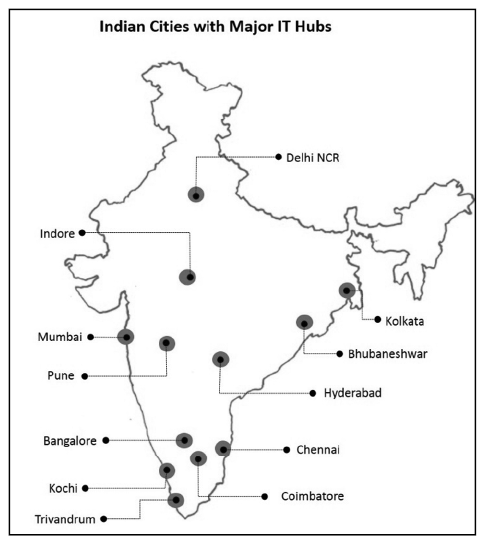
Question : “The growth of cities as I.T. hubs have opened up new avenues of employment, but has also created new problems”. Substantiate this statement with examples
(2017)
Answer : How it opened the avenues of Employment?
Question : What is the basis of regionalism? Is it that unequal distribution of benefits of development on regional basis eventually promotes regionalism? Substantiate your answer.
(2016)
Answer : Roots of regionalism is in India’s manifold diversity of languages, cultures, ethnic groups, communities, religions and so on, and encouraged by the regional concentration of those identity markers, and fueled by a sense of regional deprivation. For many centuries, India remained the land of many lands, regions, cultures and traditions.
There are various reasons for its emergence of Regionalism in Indian Politics such as
Question : Critically examine whether growing population is the cause of poverty OR poverty is the main cause of population increase in India.
(2016)
Answer : Poverty is the term used to describe when a person is unable to meet their basic needs mainly due to economic constraints. The basic needs of a person are clean water, adequate food, shelter, health, and education. When a person does not have these basic needs due to economic constraints, they are considered to be living in poverty.
Population and poverty both depends upon each other. Population in various ways leading towards the poverty:
Question : With a brief background of quality of urban life in India, introduce the objectives and strategy of the ‘Smart City Programme.”
(2016)
Answer : QUALITY OF URBAN LIFE
Across major indicators on quality of life such as water supply, public transportation, parks and public spaces, sewage and solid waste treatment, Indian cities are lacking behind. Also quality of urban services isn’t commensurate with the needs of growing urbanization which is now around 31% but expected to grow to 50% by 2030.
Urban life in India is characterized by many challenges such as –
Question : Why are the tribals in India referred to as the Scheduled Tribes? Indicate the major provisions enshrined in the Constitution of India for their upliftment.
(2016)
Answer : There are certain communities which have their own distinct culture and religion and are excluded from the traditional social structure. These communities are called Scheduled Tribes in the Constitutions as they are included in the list or schedule prepared by the government.
Provisions in the Indian constitution for their upliftment:
II.B - Educational, Economic and Public Employment-related Safeguards
Question : “An essential condition to eradicate poverty is to liberate the poor from deprivation.” Substantiate this statement with suitable examples.
(2016)
The notion of poverty has undergone significant changes in recent years. These have been due to the constraints and insufficiencies of a notion based solely on income terms. The uni-dimensional approach estimates poverty from an indicator of the household’s economic capacity, such as family income adjusted by equivalence scales, and a threshold defined as a percentage of average or median income. The generalized dissatisfaction ....
Question : Mahatma Gandhi and Dr. B.R. Ambedkar, despite having divergent approaches and strategies, had a common goal of amelioration of the downtrodden. Elucidate.
(2015)
Answer : Gandhiji was born in a merchant class Hindu family. He approached the problem of untouchability from humanitarian perspective and wanted to erode it out from the fabric of the society. Whereas Ambedkar identified himself as the victim of that corrupt practice and stood to protect other dalits from the fallout of this inhumane practice.
Gandhiji called untouchables as ‘Harijans’ meaning son of the god. He believed in four fold division of the Hindu society that is ....
Question : How do you explain the statistics that show that the sex ratio in Tribes in India is more favourable to women than the sex ratio among Scheduled Castes?
(2015)
Answer : In tribal societies of India, women generally enjoy better status in comparison to general society specifically in relation to the scheduled castes. Most of these tribal societies are matriarchal and follow matrilineal system i.e. in these societies decent is traced through the mother or the female ancestress. Tribal women enjoy much higher rights with respect to participation in decision making, occupations, inheritance of property and control over family. Women are the custodian of the family ....
Question : Discuss the changes in the trends of labour migration within and outside India in the last four decades.
(2015)
Answer : Migration has become a universal phenomenon in modern times. Due to the expansion of transport and communication, it has become a part of worldwide process of urbanization and industrialization. In the last four decades, following trends emerged in International labour flow from India with the changed destination and occupations of the labour.
First, persons with professional expertise, technical qualifications and skills migrate to high-income developed and traditionally migrant receiving countries like USA, UK, Canada, either as ....
Question : Discuss the positive and negative effects of globalization on women in India.
(2015)
Answer : Globalization impacts the everyday lives of women in India. India today, a country where women are becoming more prominent, yet increasing numbers, women are fighting long-standing prejudices. Women still faces enormous pressure to conform to social mores - conforming to traditional roles within families. Though women have made great strides in the corporate world in the last three decades, women from all income classes are still too often discouraged by family members from having careers ....
Question : Debate the issue of whether and how contemporary movements for assertion of Dalit identity work towards annihilation of caste.
(2015)
Answer : The contemporary movement for the social emancipation of dalits can be traced back to the later part of the 19th century, when Jyotirao Phule established Satya Shodhak Samaj to attain equal rights for lower castes. The main issue around which these movements have been revolving are abolishment of untouchability. These movements project the indignities, agonies, humiliation, and overall sufferings of the sudras, and particularly the untouchables. Dalits being deprived of education and freedom of occupation ....
Question : Smart cities in India cannot sustain without smart villages. Discuss this statement in the backdrop of rural urban integration.
(2015)
Answer : A smart city is equipped with basic infrastructure to give a decent quality of life, a clean and sustainable environment through application of some smart solutions. Every state in India will at least get one smart city. The purpose of these smart cities is to drive economic growth and improve the quality of life of people by enabling local area development and harnessing technology, especially technology that leads to smart outcomes. Area based development will ....
Question : How does patriarchy impact the position of a middle class working woman in India?
(2015)
Answer : Patriarchy as an ideology is deeply embedded in several societies, culture and institutions as well as in the minds of men and women. Patriarchy is a concept discussed by sociologists and feminist as an institutional structure with male dominant or an ideology based on the power of men.
Patriarchy in India varies in degree depending upon the region, community, class, caste and religious grounds. So, study of patriarchy in India should be issue based and on ....
Question : Why do some of the prosperous regions of India have an adverse sex ratio for women? Give your arguments.
(2014)
Answer : The sex ratio of India by 2011 census is 940 females per 1000 males and national child sex ratio (0-6 years) which decreased from 927 girl children per 1000 boys in 2001 to 914 in 2011 census.
The sex ratio of most prosperous regions of India have Chandigarh (818), NCT of Delhi (866), Madhya Pradesh (916), Rajasthan (926), Haryana (877) and Punjab (893) and their corresponding child sex ratio is also very low when compared to ....
Question : The life cycle of a joint family depends on economic factors rather than social values. Discuss.
(2014)
Answer : Three to fourgenerations living under common roof is one of the cultural practices in traditional India. This cycle still continues in contemporary too. Elder male member lead the family with decisions pertaining to economic and social, shows India as patriarchal society. This joint family, existed in traditional India to contemporary is more driven by economic factors than the prescribed social values.
In the agrarian Indian society, land holding were belonged to elder male member of family ....
Question : Discuss the various economic and socio-cultural forces that are driving increasing feminization of agriculture in India.
(2014)
Answer : In the recent years there is increasing feminization of agriculture in India. It is said that by feminization of agriculture there is increase in the role of women in agricultural activity or there is high proportion on women working in agricultural activity when compared to men.
Such feminization of agriculture has various economic and socio-cultural factors, when there is development of economy the contribution of agriculture sector starts decreasing in GDP indicator and consequently there is ....
Question : How do the Indian debates on Secularism differ from the debates in the west?
(2014)
Answer : Secularism means “not connected to only religion”, when it refers to nation it is said that ruling power separates itself from religion. The concept of secularism was initiated in the western countries during Renaissance period, where the power got completely detached from the control of church. In India, there were no concept of secularism existed before the British rule, since India is a multi-religious country here the concept of co-existence and religious tolerance was followed. ....
Question : Critically examine the effects of globalization on the aged population in India.
(2013)
Answer : Globalization is a complex pheno-menon which includes increased human inter-connectedness facilitated by new information technologies and huge volumes of trade, capital, people, cultures flowing across national borders, and an ever more integrated global economy.
The effects of globalization on the aged population are as follows:
Health sector has been thoroughly affected by integration of the world. Patent laws related to medicines changed. Globalization brought new opportunities for procurement of medical facilities and medicines but its effect has ....
Question : Growing feeling of regionalism is an important factor in the generation of demand for a separate state. Discuss.
(2013)
Answer : In the contemporary analysis of the development of Indian political system, region-alism has acquired through phases a distinct connotation and is used to indicate an agglomeration of all those forces which are generally considered to be “centrifugal” polarized to centralism and nationalism. It is therefore not unusual to find analysis of economic regionalism, linguistic regionalism and religious-regionalism included in the general frame of regionalism. Thus, in the Indian context, regionalism is a nebulous concept.
Regionalism in ....
Question : Write a critical note on the evolution and significance of the slogan “Jai Jawan Jai Kisan”.
(2013)
Answer : “Jai Jawan Jai Kisan” was a slogan given to India by the Late Prime Minister of India Lal Bahadur Shastri in 1965. It means hail the soldier and hail the farmer. Soon after Shastri took over the primeministership of India after Nehru’s death, India was attacked by Pakistan. At the same time there was scarcity of foodgrains in the country. Shastri gave the slogan Jai Jawan Jai Kisan to enthuse the soldiers to defend India ....
Question : Discuss the various social problems which originated out of the speedy process of urbanization in India.
(2013)
Answer : Urbanization refers to an increase in the ratio of urban to rural population. The impacts of speedy urbanisation on society are:
Question : Critically discuss the objectives of Bhoodan and Gramdan movements initiated by Acharya Vinoba Bhave and their success.
(2013)
Answer : The concept of individual owner-ship of land that is prevalent at present was not there in India in the ancient times. The State was not the ultimate and sovereign owner of the land; it had, only the right to a certain share in the produce of the land. In the middle ages, due to increasing demands of the State, the land revenue started increasing. During the period of British imperialism, it reached unbelievable levels. And ....
Question : Male membership needs to be encouraged in order to make women’s organization free from gender bias. Comment.
(2013)
Answer : Women organization are coming up not because to carve out new world for themselves but the main reason is to establish to the world that they are less than their male counterpart and prove they have sufficient strength and wisdom to run a successful organization.
In the era of globalization, women has benefitted a lot in terms of knowledge, awareness, exposure modern development and technological advancement make them feel they are no more inferior to male ....
Question : What is the 'Parivarik Mahila Lok Adalat'?
(2012)
Answer : Parivarik Mahila Lok Adalat (PMLA) is a concept evolved by National Commission for Women (NCW) for redressal and speedy disposal of cases related to women under Legal Service AuthorityAct 1957. It has its roots in the traditional nyaya panchayats. It aims at amicable mutual settlement of disputes related to womenconcerning matrimonial disputes like divorce ,maintenance of wife parents and children, bigamy, motor accident claims, disputes relating to labour laws, compounded criminal cases by involving non-governmental ....
Question : Problems specific to the denotified and nomadic tribes in India
(2011)
Answer : The discrimination, abuse and socio economic marginalisation faced by millions of Indians belonging to denotified and nomadic tribes have their roots in the 19th century but this historical pattern of marginalisation and abuse continues over today and is a blight on India's human right record and its declared commitment to the equality and well being of all its citizens under both domestic and international laws.
Living in precarious conditions, India's denotified and nomadic tribes are subject ....
Question : The significance of counter-urbanisation in the improvement of metropolitan cities in India.
(2011)
Answer : With the increasing urban population the number of urban agglomeration and cities having a population one million increased from 23 to 35 in just one decade. These metropolitan cities provided home to about 37.81 per cent of the total urban population of India. Although India is one of the less urbanised countries of the world with about 28% of urban population living in town and cities but facing a serious crisis of metropolitan urban growth. ....
Question : “Disputes between the riparian states on sharing of river waters in post-Independence India are becoming increasingly complex.” Objectively analyse the major disputes in this connection, with special reference to the Southern States.
(2010)
Answer : Rivers are natural geographical features which does not follow the man made boundaries. In India which is a ‘nation of nations’ having 35 different provincial boundaries. It is but natural that disputes arises a lot and post green revolution inter-State disputes have taken a particular form and mostly it follows from the inter-State riparian distribution issues.
There are 16 river basins in Northern India and 14 river basins in the Southern India. All of them originate ....
Question : Golden Revolution.
(2010)
Answer : It refers to the increase in the production of fruits and vegetables. Horticulture in India now contributes 30.4% of GDP of agriculture. There has been a phenomenal increase in the production of fruits and vegetables in India since 1950s, but still there is lot of potential which could be developed. It calls for research and the priorities are of genetic resource enhancement and its utilization, enhancing the efficiency of production and reducing the losses in ....
Question : “Upliftment of the neglected sections of society will be best served with many more centers of the Indira Gandhi National Tribal University.” Expand on the assertion made.
(2010)
Answer : The Indira Gandhi National Tribal University has been established by an Act of the Parliament of India at Amarkantak in Madhya Pradesh. The jurisdiction of the University extends to the whole country and it is fully funded by the Central Government through the University Grant Commission. The university caters to the tribal’s long cherished dream of higher education.
The tribal people are rich in cultural heritage and skill of art and craft but they are still ....
Question : Examine the status of urbanization among the states in India and bring out spatial inequalities.
(2009)
Answer : According to 2001 census, 285.3 million persons or 27.78% of the total population of India is in urban areas. Though India is among the least urbanized countries in the world, there prevails an extreme variation in the states on urbanization status and trends. Some of the states like Kl, Mah, Tn, Gj and Wb are most urbanised with 38% of population living in urban areas whereas states like Uttar Pradesh, Bihar, Odisha, Jharkhand, Himachal Pradesh ....
Question : What should be the role of the media to project ‘mass reality’ in place of ‘illusion of reality’?
(2008)
Answer : The media along with art and literature must help the people in their struggle against poverty, unemployment and other social evils in contemporary India. The median today are largely acting irresponsibly and not serving the people in their struggle against poverty, unemployment and any other social evils.
In India, media was born as an organ of the people against the British rule. Media became powerful tool in the hands of the people. During that time only ....
Question : Discuss the problems in achieving national integration in India.
(2008)
Answer : National integration is an essential theme of nation building. It brings adverse groups of a nation into a common body. The problem of integration is not unique to India, as a large number of new nations have faced the monstrous problem of integrating the nation from the plentiful of diversities, often conflicting interests. In India the problem of integration has its own structural, regional, economic, political and religious implications. Geopolitically India has its units. Structurally ....
Question : Examine the role of caste in Indian politics.
(2008)
Answer : Caste by participating in the modern political system is now exposed to divisive influences and a new form of integration resulting form a new scheme of universalist-particularist relationships.
Caste provides to politics on the one hand a structure of divisions and accommodations and on the other hand a cohesive element which absorbs tensions and frustrations.
Castes are able to influence each other to bargain for powers. The formation role of caste associations are also playing as important ....
Question : “The conditions of the urban poor are more deplorable than that of their rural counterparts.” Give your views.
(2008)
Answer : Urbanisation is increasing in India. In urban places population is also increasing. This is because of increase in migration from rural areas. People are migrating from rural areas to urban areas in search of employment or education. The people who are entering in skill jobs are good. But the life of the unskilled labourers is very miserable in the urban areas.
The unskilled labourers are included in the lower layer of the urban areas. Those ....
Question : “Globalization has brought about a distinct class divide in India instead of ushering in a classless society.” Critically examine this argument.
(2008)
Answer : In 1991, the Indian economy was liberalized to make India one of the fastest growing economies in the world. For that an array of reforms was initiated with regard to industrial, trade and social sector to make the economy more competitive. The initiated economic changes have had a dramatic effect on the overall growth of the economy. It also heralded the integration of the Indian economy into the global economy.
Indian society was divided in many ....
Question : What are the main determinants of voting behaviour in India?
(2007)
Answer : For the past 57 years in India, the democratic system has been working smoothly. In fact in India the Indian citizens enjoy their full freedom and understanding in voting power. However many a times voters put priority to the emotionally attached benefits also. Common mass vote is often influenced by the benefit issues related to the daily life, viz. price rise, unemployment, law and order system and any developmental issues. National security, war and peace ....
Question : What were the main recommendations of the Platform for Action (PFA) adopted at the Beijing Women's Conference, 1995?
(2007)
Answer : The main recommendations of the Platform for Action (PFA) under the 1995 Beijing Women's Conference are mentioned below: There are four important parts of the Platform for Action: (1) The dialogue on the recommendation of the purposes. (2) Global framework, (3) Special area for awakening, and (4) Important aim and action.
Women empowerment was the main agenda in this Conference. In the conference the main recommendations of Vienna conference were asked to be implemented. In the ....
Question : Discuss the steps to get rid of child labour in India.
(2007)
Answer : A lot of steps have been taken in India to get rid of child labour in India. In Article 24 and Article 39 of the Indian Constitution, child labour and exploitation have been abolished for the first-time. India has signed with the International Labour Organisation for the understanding regarding the abolition of child labour. To check the issue regarding child labour India has constituted a child labour commission. The Supreme Court has also issued a ....
Question : Discuss economic backwardness as a major challenge of Indian democracy. Can democracy and development go together smoothly?
(2006)
Answer : Economic backwardness challenge on Indian democracy
In India there is unequal development pattern without any uniformity in economic development is affecting Indian democracy. There is lot of regional variation where within country certain states like Kerala, Gujarat, and Tamil Nadu have better development when compared to eastern and north eastern region. Because of this differential growth there arises economic backwardness resulting in poverty, under nutrition, lack of access to education, health infrastructure etc. In such circumstances, ....
Question : What are the social and economic consequences of abolishing child labour in India?
(2006)
Answer : India is facing the curse of child-labour. A large number of children have to work as child labourer in industries or other places of works like hotels, stalls, shops, etc. Laws have been made to abolish child labour from India. Various schemes and programmes have also been formulated to meet this end. But yet, it is a distant goal to be achieved. Moreover, if the child labour is abolished, India will have to face some ....
Question : Explain the social constraints in bringing about gender equality in Indian society.
(2006)
Answer : Gender equality is a great challenge for Indian society. Women’s lives are shaped by customs that are centuries old. “May you be the mother of a hundred sons” is a common Hindu wedding blessing. Apart from various traditional customary problems, various social constraints are also there. They are:
In patrimonial, male-dominated society of India, female have always been subjected to domestic expressions. They are psychologically dominated by male. This creates lack of confidence among them to ....
Question : Bring out the issues involved in implementing compulsory primary education in India.
(2006)
Answer : Right to Education Act making it mandatory for the Central, state and local bodies to provide free and compulsory education to all the children in the 6-14 years age group, but the real scenario of elementary education in India is pathetic. Below are some of issues which make free and compulsory education in India a mammoth task.
Inadequacy of Financial Provision: Due to over expenditure in defense, foreign debt, infrastructure development among others, and the expenditure ....
Question : What are the implications of gender disparities in India?
(2006)
Answer : Gender inequality has adverse impact on development goals as it reduces economic growth. It hampers the overall well being, because blocking women from partici-pation in social, political and economic activities can adversely affect the whole society. Many developing countries including India, have displayed gender inequality in education, employment and health.
This situation leads to increase in number of unmarried men population. An additional problem is that many of these men are rural peasants of low socioeconomic ....
Question : Discuss the impact of globalization on higher education in India.
(2005)
Answer : Funding on part of the government as a result of this globalisation has considerably reduced. In it now private companies and foreign agencies are being given due weightage. The standard of education has substantially been raised since private and foreign agencies are quite innovative and experimental in their attitude and dealing.
This globalisation has also made distant education available inside the country. The instant impact of it is that students who are diligent and meritorious lot ....
Question : Discuss the steps taken by Government to check child labour and promote child welfare.
(2003)
Answer : Policies for elimination of Child Labour: Various constitutional and legal provisions have been put in place to deal with the problem of child labour. Article 24 of the Indian Constitution provides that “no child below the age of fourteen years shall be employed in work in any factory or mine or engaged in any other hazardous employment”. In India, the first legislation for regulating employment of children in factories was passed in 1881. The factory ....
Question : The issue of gender equality in India
(2003)
Answer : In a country like India where gender discrimination is a major problem, gender equality is something to question. But the Constitution of India does provide for equality. Besides, the Government of India has also undertaken number of initiatives to guarantee gender equality. The Constitution of India ensures gender equality in its preamble as a fundamental right but also empowers the state to adopt measures of positive discrimination in favor of women by ways of legislation ....
Question : What are the distinctive features of the Lokpal Bill introduced in the Parliament this year?
(2003)
Answer : The distinctive features of the 2001 Lokpal Bill are as follows:
Question : Define Globalization and differentiate it with internationalism.
(2000)
Answer : Globalization means increasing integration between different economics of the world. The economic gap between different nations is reduced. This is achieved by removing all restrictions between nations on the movement of: goods, services, capital, and technology. In other words globalization results in international division of labour. The present day world is experiencing the information technology revolution. Every nation must keep its doors and windows open to the outside world, i.e. it must take part in ....
