
Surrogacy Bill, 2016
Lok Sabha on December 19, 2018 passed the Surrogacy (Regulation) Bill, 2016. Cleared by the Cabinet in 2016, the Bill was subsequently referred to a Parliamentary Standing Committee (Health & Family Welfare) before its passage.
- The Surrogacy Bill states some rules to control surrogacy in the country and has completely banned the commercial surrogacy, only allowing for altruistic surrogacy.
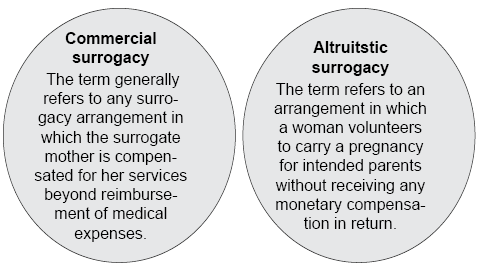
Main Takeaways from Surrogacy Bill
- The Bill entitles only Indian citizens to avail surrogacy; foreigners and NRIs are not allowed to commission surrogacy in India.
- Homosexuals and single parents are also not allowed for surrogacy and couples who already have children are also ....
Do You Want to Read More?
Subscribe Now
Take Annual Subscription and get the following Advantage
The annual members of the Civil Services Chronicle can read the monthly content of the magazine as well as the Chronicle magazine archives.
Readers can study all the material before the last six months of the Civil Services Chronicle monthly issue in the form of Chronicle magazine archives.
Related Content
- 1 Notifiable Diseases
- 2 Pradhan Mantri Awas Yojana-Urban (PMAY-U)
- 3 Shompen Tribe
- 4 Pradhan Mantri Janjatiya Vikas Mission
- 5 PMFME Bazaar
- 6 Jal Jeevan Mission (JJM)
- 7 12 Years of Pradhan Mantri Jan Dhan Yojana(PMJDY)
- 8 Nasha Mukt Yuva for Viksit Bharat Sankalp Abhiyan
- 9 National Commission for Minorities
- 10 Women in Indian Agriculture: Addressing the Hidden Costs of Invisible Work

- 1 Three Central Schemes have Generated 2.7 Million Jobs
- 2 NITI Aayog Releases Second Delta Ranking of the Aspirational Districts
- 3 National Commission for Indian System of Medicine Bill, 2018
- 4 No Rise in Working Women Despite High Literacy Levels
- 5 Boost to Educational Infrastructure in Tribal Areas
- 6 National Medical Devices Promotion Council to be Set up under DIPP
- 7 No Fund Allotted to Treat Rare Diseases
