
Interview - Surabhi Yadav
Surabhi Yadav
UPSC Civil Services Examination, 2025
(All India Rank 14AIR)
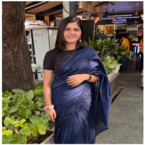
CSC: Heartiest congratulations to you from Civil Services Chronicle for your success. How are you feeling?
Surabhi: It’s a surreal feeling and, finally, a moment of relief.
CSC: What was your inspiration for becoming an IAS officer? To whom do you give credit for your success? What was the role of your family and others (teachers, friends) in your preparation and success?
Surabhi: My inspiration was my parents; their hard work and their dream for my success kept me motivated throughout. I give credit to my parents and friends who believed in me throughout this journey. They kept me focused on my goal. The people around you shape your journey; for me, they pushed me during my low points. UPSC isn’t just an exam of mental labor; it also requires a lot of emotional intelligence, and having the right people around you helps you navigate those emotions effectively.
CSC: What strategy should one follow for preparing for General Studies (Prelims & Mains)? Did you integrate your Prelims and Mains preparation, or were they separate?
Surabhi: To prepare for Prelims and Mains, one should focus on reading the syllabus first, then focus on the basic resources mentioned by those who have cleared the exam. Revise them thoroughly and solve Previous Year Questions (PYQs) to draw the boundaries of topics and fill the gaps in your preparation. My strategy involved both integration and separation—some topics are useful for both Prelims and Mains, but others, like Internal Security, are only for Mains. So, one needs to focus separately on Mains-specific study, ideally until December or January, and then focus on Prelims-specific study from February onwards.
CSC: How much time did you devote to each stage—Prelims, Mains, Interview, and Optional? How did you manage your time for both the Prelims and Mains examinations?
Surabhi: I had a long journey with this exam, so my scenario is quite different from the "ideal" timeline. However, generally, one should complete one reading and the notes for their optional subject and GS by December. From January, the focus should be on Prelims until the exam. Then, immediately after Prelims, go "full-on" into Mains mode. Interview preparation can be done once Mains is over; that is also when one can start working on their Detailed Application Form (DAF).
CSC: Did you prepare notes? How helpful are they, and what is your advice on note-making?
Surabhi: I made handwritten notes, mainly for Mains. I didn’t have short notes for Prelims as such. Notes for Mains help in revising efficiently. One should definitely make short notes for Mains—whether written or digital.
CSC: What was your optional subject? What was the basis for selecting it? What strategy should one follow for preparation?
Surabhi: My optional was History. My academic background helped me choose it, as I have completed both my graduation and post-graduation in History. For any optional, one should be thorough with the syllabus, make notes on every topic and sub-topic mentioned, and then go through PYQs to ensure the topic is covered in its entirety.
CSC: What was your preparation strategy and booklist for Ethics (Paper-IV)?
Surabhi: I looked at previous years' toppers' notes uploaded on various Telegram channels and then made my own notes using them as base material. After that, I wrote answers for all the PYQs to understand the demand and structure of the paper. I then integrated current examples from newspapers for value addition and to add different dimensions to my answers.
CSC: Tell us about your preparation for the Essay paper.
Surabhi: For the essay, one should focus on flow and structure. You can practice writing previous years' essays and add plenty of examples. However, you must also focus on the argumentative part of the essay; it shouldn’t just be a collection of examples.
CSC: What was your style of writing in the exam? How was it distinct from the general writing style? How did you develop it?
Surabhi: My writing style was basic and simple—nothing extraordinary. I just focused on adding value to my content and writing crisp points while addressing the specific demand of the question. A lot of brainstorming and answer-writing practice helped me develop this style.
CSC: How did you prepare for the interview? What types of questions were asked? Did you answer them all? Was there any specific area the board emphasized?
Surabhi: For the interview, I focused thoroughly on my DAF and used AI models to generate questions around various entries. I also practiced with my peers. The questions in my interview were mainly based on current affairs and History. I was able to answer most of them. There was a significant focus on International Relations (IR) questions.
CSC: What is the importance of coaching in Civil Services preparation?
Surabhi: It is a personal choice. If one feels they need guidance with certain subjects, they should go for it. Otherwise, most resources are available on YouTube and Telegram, which one can use for guidance.
CSC: What was the role of Civil Services Chronicle in your success?
Surabhi: It helped me consolidate my current affairs and build arguments for Mains on specific topics covered by the magazine.
CSC: What were your primary sources of preparation? Which books, magazines, newspapers, and online sources did you use?
Surabhi: I used basic resources for each subject, with a special focus on the static portions of Environment and Science & Technology for Prelims. I read the newspaper almost every day. I also frequently visited government websites like the PIB to track topics in the news. Apart from this, monthly magazines helped in the compilation of various topics.
CSC: Thank you for sharing your incredible journey and such practical insights with our readers. Your success will undoubtedly serve as a blueprint and a great source of motivation for thousands of future aspirants.
Topper's Interview
-
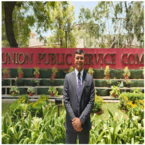
Raj Ujjwal - All India Rank 37 - Assistant Commandant Examination 2025
-
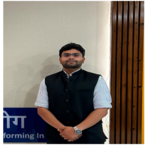
Utkarsh Yadav - All India Rank 32 - UPSC Civil Services Examination, 2025
-

Mansi Gupta - All India Rank - 78 - UPSC CSE 2025
-

Shambhavi Tiwari - All India Rank - 46 - UPSC CSE 2025
-
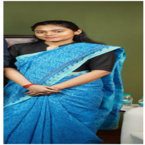
Deeksha Chourasiya - All India Rank - 44 - UPSC Civil Services Examination 2025
-
DIKSHA RAI - All India Rank 40 - UPSC Civil Services Examination 2025
-
RUPAL JAISWAL - All India Rank 43 - UPSC Civil Services Examination, 2025
-
Sakshi Jain - All India Rank-13th - UPSC Civil Services Examination 2025
-

Ananya Sharma - All India Rank – 37 - UPSC Civil Services Examination 2025
-

Zinnia Aurora - All India Rank – 6th - UPSC Civil Services Examination, 2025
