
Interview - DIKSHA RAI
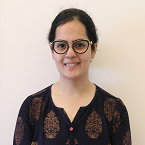
DIKSHA RAI
UPSC Civil Services Examination 2025
(All India Rank 40AIR)
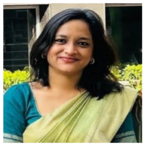
CSC: Heartiest congratulations to you from Civil Services Chronicle for your success. How are you feeling about it?
Diksha: Thank you so much. It has been a long journey for me, as this was my fifth attempt. I feel deeply grateful and excited at the same time as I look forward to the next chapter of my professional life.
CSC: What inspired you to become an IAS officer?
Diksha: My initial inspiration came from my father, who always encouraged me to pursue a career through which I could make a meaningful impact on people’s lives. Over the years, however, this aspiration evolved into a deeper personal sense of purpose and commitment towards public service.
CSC: Whom do you credit for your success? What role did family, teachers and friends play in your preparation?
Diksha: I owe my success to my parents, brothers, and close friends, who stood by me throughout this long and demanding journey. The role of family and friends in this preparation is invaluable—they provided emotional support, constant motivation, and a sense of stability during difficult phases, which helps one remain focused and resilient.
CSC: What strategy should one follow for preparing for General Studies Prelims and Mains? Did you integrate your preparation for both or keep them separate?
Diksha: I followed an integrated approach for both Prelims and Mains preparation as there is significant overlap between both, only difference being in approach. However around three months before the Prelims examination I totally shifted my focus to Prelims exam. Revision and practicing MCQs, especially PYQs are non-negotiable aspects for Prelims exam preparation. One should practice 15-20 mock papers before the exam to get in the groove of solving MCQs in exam like conditions.
For Mains, in this attempt, I limited my content and focussed more on revision, brainstorming PYQs and answer writing practice. I found model answers of Mains test series of different institutes to be a good source for enriching content and for practice. Reading toppers’ answers and essay copies especially during the period between Prelims and Mains further helped hone my answer writing skills.
CSC: Did you prepare notes? How helpful are notes? What is your advice on note-making?
Diksha: Notes are an essential part of civil services preparation. I prepared notes in both digital and physical formats, though I personally preferred handwritten notes. Notes help in revision as well as consolidation of content. Short and crisp notes are especially useful for quick revisions before the examination, particularly Mains. My advice would be to keep notes concise, organised and regularly updated with current affairs and value additions. In Anthropology, one can go for making notes in Q&A format if it suits their revision style.
CSC: What was your optional subject? What was the basis for selecting it? What strategy should one follow for optional preparation?
Diksha: My optional subject was Anthropology. I chose it based on my interest in the subject and the availability of sufficient study material. Optional selection should be done carefully after going through the syllabus, previous year questions, availability of guidance and one’s own interest in the subject.
Since the optional carries significant weight in the Mains examination, it requires comparatively deeper understanding and better conceptual clarity. One should begin with the syllabus, refer to standard sources, and supplement preparation with value additions, toppers’ copies and notes. Regular answer writing practice is indispensable for scoring well in the optional paper.
CSC: What was your strategy and preparation for Ethics Paper-IV?
Diksha: For Ethics, I referred to Atul Garg Sir’s book for basic understanding and then prepared my own notes based on the syllabus and Previous Year Questions. I collected examples and case studies from various sources, including toppers’ answer copies and newspapers. Since Ethics is a lengthy paper, answer writing practice and mock tests become very important.
CSC: Tell us something about your preparation for the Essay paper.
Diksha: Essay is one of the most important papers in the Mains examination, although it is often neglected. My preparation mainly involved reading toppers’ essays, Ethics notes and online sources. I used to collect anecdotes, stories and examples that could make essays more engaging and impactful.
In my opinion, simple and well-structured essays with correct interpretation of the topic fetch good marks. I focused on exploring different dimensions of the topic while maintaining coherence and flow throughout the essay. Practicing and brainstorming previous years’ essay topics was also very helpful.
CSC: What was your writing style in the examination? How was it different from general writing? How did you develop it?
Diksha: I generally preferred writing in points with clear subheadings and sub-points. I also incorporated maps, diagrams and flowcharts wherever relevant. In GS papers, my focus was on maximising dimensions and covering different aspects of the question.
I tried to enrich answers with value additions such as examples, committee recommendations, reports and judgments wherever possible.
I developed this writing style through consistent practice and brainstorming. Previous Year Questions were particularly helpful in improving answer-writing skills.
CSC: How did you prepare for the interview? What kind of questions was asked? Was there any specific area the board focused on?
Diksha: I started my interview preparation by focusing on the keywords mentioned in my DAF and by regularly following current affairs.
To improve articulation and opinion formation, I discussed important issues and opinion-based questions with friends. One-to-one and panel mock interviews were also helpful in identifying areas of improvement.
In my interview, the questions were largely based on my DAF, although there were some philosophical and opinion based questions.
CSC: What is the importance of coaching in civil services preparation?
Diksha: Coaching can be helpful for students who are looking for guidance and direction, but I do not think it is absolutely essential. Today, sufficient material and guidance are available online. One should be smart in limiting resources and maximising output from them. Ultimately, self-study, consistency, and smart hard work are the most important factors in this examination.
CSC: What is the role of Civil Services Chronicle in your success?
Diksha: Civil Services Chronicle magazine was one of the initial sources through which I learned about the civil services examination process. I used to read toppers’ interviews published in the magazine, which helped me understand the demands and nature of this examination better.
CSC: What were your sources of preparation? Which books, magazines, newspapers and online sources did you use?
Diksha: I primarily relied on standard books, NCERTs, current affairs magazines, newspapers and my own notes. I also referred to toppers’ copies, toppers’ notes, online platforms and value addition materials for enrichment. Previous Year Questions and the syllabus remained the core pillars of my preparation.
CSC: Which books would you suggest for Prelims, GS, CSAT and Mains Papers I–IV and Essay?
Diksha:
Prelims
- History: New NCERTs (Class 9–12), Tamil Nadu Board History books, Spectrum for Modern History
- Geography: NCERTs (Class 6–12), PMF IAS material
- Economy: Vivek Singh Sir’s book
- Polity: M. Laxmikanth
- Environment: Shankar IAS book
- Current Affairs: Newspapers and monthly current affairs magazines
- CSAT: PYQ practice and YouTube lectures
GS Paper I
- Art & Culture: Own notes with reference to PYQs and Nitin Singhania Sir’s book
- World History: Toppers’ notes
- Society & Geography: I Updated Rushikesh Reddy Sir’s notes
GS Paper II
- Referred to Vision VAM for Polity, Governance and Social Justice and prepared my own notes based on syllabus keywords. I also used toppers’ notes to fill gaps in my notes, whenever required.
- For International Relations, I mainly relied on current affairs and self-made notes
- I also referred to Mains-specific current affairs compilations before the examination
GS Paper III
- Vision VAM served as my basic source
- I supplemented it with current affairs, toppers’ notes and value additions wherever required
- Mains current affairs compilations were useful for covering important contemporary topics comprehensively
- I believe one should have short, crisp and regularly updated notes for every keyword mentioned in the syllabus.
CSC: Which books would you suggest for Optional Paper I & II?
Diksha:
Paper I
- Anthropology by Ember & Ember
- Vivek Bhasme Sir’s Anthropology Simplified
- Akshat Jain Sir’s Anthropology Demystified
- IGNOU MA material
- EPG Pathshala
- Makhan Jha for Theories
- P. Nath for Physical Anthropology
- Mandar Patki Sir’s notes
- Internet sources for value addition
Paper II
- Tribal Anthropology by Nadeem Hasnain
- Indian Anthropology by Nadeem Hasnain
- Main Bhi Bharat series, XAXA committee report
- Vivek Bhasme Sir’s Anthropology Simplified
- Akshat Jain Sir’s Anthropology Demystified
- EPG Pathshala
- Internet sources for current examples and enrichment
CSC: Thank you for sharing your inspiring journey with us; we wish you the very best as you embark on your career to serve the nation as an IAS officer.
Topper's Interview
-
Raj Ujjwal - All India Rank 37 - Assistant Commandant Examination 2025
-
Surabhi Yadav - All India Rank 14 - UPSC Civil Services Examination, 2025
-
Utkarsh Yadav - All India Rank 32 - UPSC Civil Services Examination, 2025
-

Mansi Gupta - All India Rank - 78 - UPSC CSE 2025
-

Shambhavi Tiwari - All India Rank - 46 - UPSC CSE 2025
-
Deeksha Chourasiya - All India Rank - 44 - UPSC Civil Services Examination 2025
-
RUPAL JAISWAL - All India Rank 43 - UPSC Civil Services Examination, 2025
-
Sakshi Jain - All India Rank-13th - UPSC Civil Services Examination 2025
-
Ananya Sharma - All India Rank – 37 - UPSC Civil Services Examination 2025
-
Zinnia Aurora - All India Rank – 6th - UPSC Civil Services Examination, 2025