
Interview - Ananya Sharma
Ananya Sharma
UPSC Civil Services Examination 2025
(All India Rank – 37AIR)
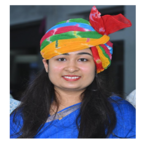
CSC: Heartiest congratulations to you from Civil Services Chronicle on your success. How are you feeling about it?
Sakshi: Thank you. I feel relieved and grateful. It has been a long marathon of discipline and perseverance. Now, I am looking forward to being trained as an officer.
CSC: What inspired you to become an IAS officer? Whom do you credit for your success? What role did your family and others (teachers, friends) play in your preparation and success?
Sakshi: It was a long-cherished aspiration. After working in the corporate sector as a Chartered Accountant, I recognized that while financial success is significant, it was not my only objective. I sought a career that offered a combination of professional diversity, meaningful impact, and direct service to the nation. The Civil Services perfectly bridge that gap between professional excellence and social responsibility.
I attribute my success to the Almighty and my gurus. I also give deep credit to my parents and my brother; their unwavering trust and constant encouragement lifted me during the toughest phases of preparation.
CSC: What strategy should one follow for preparing General Studies (Prelims & Mains)? Did you integrate your Prelims and Mains preparation, or was it separate?
Sakshi: The first step is to understand the exam by studying the syllabus and skimming through previous years’ questions (PYQs). Then, study NCERTs and read newspapers by linking them to the syllabus (one can take help from coaching websites for daily current affairs). Studying the optional subject is equally important. Solving PYQs daily and subject-wise tests help in analysing one’s strengths and weaknesses.
My Prelims and Mains preparation was not completely compartmentalized. I followed a balanced and integrated approach.
For subjects common to both Prelims and Mains, my notes were the same. I marked ‘P’ and ‘M’ separately and included the analytical parts accordingly. Prelims focus on conceptual understanding and memorization of core facts, whereas Mains focuses on analytical understanding and developing interlinkages.
A strong Prelims acts as a foundation for Mains. It is also important to understand the difference between knowing and writing. Mains demands good answer-writing skills. Regular practice, identification of mistakes, and continuous improvement are essential.
One common pitfall is consulting too many sources. One should limit sources to a maximum of two and integrate them effectively.
CSC: How much time did you devote to Prelims, Mains, Interview, and Optional? How did you manage your time in both Prelims and Mains examinations?
Sakshi: I was not able to clear my first Prelims. Therefore, in my second attempt in 2022, I focused on Prelims from March. Before that, I ensured that my optional, GS2, and GS4 were ready (November 2021 to February 2022).
This was my fourth Mains attempt, so most of the content was already prepared. I focused on improving during those 80 days and apportioned my time across Essay, GS, and Optional almost equally.
CSC: Did you prepare notes? How helpful are they? What is your advice on note-making?
Sakshi: Notes should be made after two readings (whether NCERTs, optional, or GS).
I had a separate set of notes with a clear distinction between Prelims and Mains. These were my short notes. It is essential to leave adequate margins for future updates and value addition.
I also used toppers’ notes in most subjects. I prepared consolidated notes for exam-day revision—micro notes for GS, including vocabulary, introductions, conclusions, data, and examples. I also maintained test notes for both Prelims and Mains, recording mistakes, improving content, and updating current affairs.
CSC: What was your optional subject? What was the basis for selecting it? What strategy should one follow for preparing the optional paper?
Sakshi: My optional was Commerce and Accountancy due to my background as a Chartered Accountant. One should analyse PYQs and practice them comprehensively with proper presentation.
CSC: What was your strategy for preparing Ethics Paper (GS-IV)?
Sakshi: Since I did not enroll in a GS Foundation course, I began GS-IV preparation by analysing the nature and patterns of PYQs. Memorising the syllabus helps in understanding questions and structuring answers.
I studied from Mudit Jain Sir’s Decode Ethics. I adopted a table-based approach (inspired by Shreyans Kumar, IAS 2019) for values and examples. I also made notes of quotes, shlokas, keywords, negative words, conclusions, common examples, thinkers, and philosophers (following Jayant Nahata, IAS 2020).
For case studies, I developed my own templates to approach thematic questions.
The most important part of my GS-IV preparation was answer writing. I wrote answers daily during my first Mains attempt in 2022 and again in 2025. This improved my comprehension, structuring, and presentation within time limits.
For answer practice, I referred to toppers’ copies like Shruti Sharma, Shubham Bajaj, and Rishabh Runwal. I rewrote the same answers twice to identify mistakes and improve further.
CSC: How did you prepare for the interview? What type of questions were asked? Did you answer all of them? Was there any specific area they emphasised?
Sakshi: Preparing the Detailed Application Form (DAF) is crucial, especially one’s background. It reflects seriousness and integrity. Self-introspection helps in behavioural analysis, enabling one to understand strengths and weaknesses and work on personality development.
I engaged in peer discussions and mock interviews, which provided a holistic perspective. Reading newspapers and listening to podcasts helped me understand current issues.
Mock interviews helped in structuring answers. A civil servant is expected to respond with reasoning, practicality, and common sense. Maintaining the right tone and staying calm under pressure are equally important.
I faced four interviews. Questions covered my birthplace, school, state, technical background, job, women-related issues, the handloom sector, economy, and international relations.
It is neither possible nor necessary to answer all questions. Knowledge has already been tested. The interview assesses personality traits like integrity, mental strength, calmness, and depth of thinking. If one does not know an answer, it is better to admit it rather than bluff.
CSC: Thank you very much, and we wish you all the best for your future endeavours.
=====================================================================
Prelims Booklist
- Polity: Laxmikant
- History: Class 8th, 11th and 12th, Fine Arts, Spectrum
- Topper Notes: Shubham Agarwal (AIR 25- CSE 2019), Mehak Jain (AIR 17 – CSE 2021) and Kanishak Kataria (AIR 1 – CSE 2018)
- Economy: NCERT for Micro, Few prelims pillars from Mrunal Sir, Vivek Singh 500 for practice, Web searching topic wise, ES and Budget.
- Geography: Class 11th and 12th NCERT, Rajtanil Solanki Ma’am YouTube videos for understanding concepts, Mapping from Sudarshan Sir, PMF ias website for some topics
- Science & Technology: Udaan and Current Affairs
- Environment: NCERT Class 12th, Roman Saini sir videos on YouTube, Shankar IAS, The Core Ias (Amit Sir notes), Sudarshan Sir (mapping) and Current Affairs from any one source like Sunya IAS or Vision Ias.
Mains Booklist/ Resources
- GS 1: History – Prelims source with P and M distinction, made notes based on PYQs; Geography – Prelims + Jayant Nahata Sir notes; Society – Jayant Nahata Sir notes
- GS 2: Polity – Made notes out of Prahaar and PYQ based notes; Governance and Social Justice – topic wise notes made from Vision Ias Study material and Google; IR – Notes made country-wise and grouping wise combined with Mains 365
- GS 3: Economy and Agriculture - Topic wise notes with data and examples (not overdoing it), Economic survey; Environment and Science and Technology – Mains 365; DM – Ravi Jain Sir notes (AIR 9 – CSE 2019), Internal Security – Kanishak Kataria Sir and Gemini (for updated data and examples) + Data - Government’s ‘11 Years at a Glance’
Newspapers
- The Hindu (Prelims and Mains); Indian Express, Mint and Economic Times – for Interview
- Optional – Rankers Classes material and my CA-IPCC study material.
- Paper 1 – Made my own notes
- Paper 2 – Shubham Agarwal Sir Notes
Topper's Interview
-
Raj Ujjwal - All India Rank 37 - Assistant Commandant Examination 2025
-

Surabhi Yadav - All India Rank 14 - UPSC Civil Services Examination, 2025
-
Utkarsh Yadav - All India Rank 32 - UPSC Civil Services Examination, 2025
-

Mansi Gupta - All India Rank - 78 - UPSC CSE 2025
-

Shambhavi Tiwari - All India Rank - 46 - UPSC CSE 2025
-
Deeksha Chourasiya - All India Rank - 44 - UPSC Civil Services Examination 2025
-
RUPAL JAISWAL - All India Rank 43 - UPSC Civil Services Examination, 2025
-
DIKSHA RAI - All India Rank 40 - UPSC Civil Services Examination 2025
-
Sakshi Jain - All India Rank-13th - UPSC Civil Services Examination 2025
-

Zinnia Aurora - All India Rank – 6th - UPSC Civil Services Examination, 2025
