
Interview - Sakshi Jain
Sakshi Jain
UPSC Civil Services Examination 2025
(All India Rank-13thAIR)
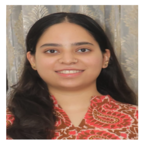
CSC: Heartiest congratulations from Civil Services Chronicle on your success! How are you feeling?
Ananya: Thank you so much! I feel deeply grateful and overjoyed. These past few days have been nothing short of surreal. I am now eagerly looking forward to beginning my training.
CSC: What inspired you to become an IAS officer? To whom do you credit for your success, and what role did family, teachers, and friends play in your journey?
Ananya: The spark was ignited by General Bikram Singh, former Chief of Army Staff and a distinguished alumnus of my alma matter, The Punjab Public School, Nabha. When he presided as Chief Guest at our Founders' Day, his address stirred in me a deep desire to serve in public life and pursue the civil services. I also wrote the Combined Defence Services Exam (I), 2024 and was fortunate to secure AIR 05 in the same.
I attribute this success, first and foremost, to the Almighty, and then to my parents and brother, who stood by me through every trial and triumph. Many teachers and friends encouraged me throughout my preparation, and I am sincerely grateful to each one of them.
CSC: What strategy should one follow for Prelims and Mains preparation? Did you integrate the two or keep them separate?
Ananya: I would recommend a graded approach — begin by thoroughly understanding the syllabus, then build conceptual clarity through NCERTs, standard books, newspaper reading, and an analysis of previous year question papers to identify recurring patterns. Layering this with multiple rounds of revision, regular answer writing practice, and honest self-evaluation helps you gauge your preparation level and identify areas that need further work.
In hindsight, I had placed excessive emphasis on Prelims in earlier attempts, as it had been a stumbling block for me. In my 2025 attempt, I consciously worked to integrate both stages, which proved far more effective. When preparation is unified, topics naturally interlink and contextualise across papers. Ultimately, the source material for both stages is the same — what changes is only the format of assessment. Prelims tests objective recall, while Mains demands that the same knowledge be presented analytically, enriched with examples, case studies, and current affairs, in a structured, subjective format.
CSC: How much time did you devote to each stage — Prelims, Mains, Interview, and Optional? How did you manage time within the examinations?
Ananya: The time I devoted varied depending on my preparation level and the proximity of each stage. In the three to four months before Prelims, I followed an 80:20 ratio — prioritizing Prelims while also revising portions of my Optional to keep the process varied and engaging. I also solved previous year papers and attempted multiple mock tests during this period. Mains preparation spanned roughly five to six months, during which I devoted broadly equal time to General Studies and the Optional.
CSC: Did you prepare notes? How helpful are they, and what is your advice on note-making?
Ananya: Yes, I prepared digital notes throughout my preparation. Good notes are essentially a filtered distillation of one's own understanding — they make it far easier to consolidate information, draw interlinkages between topics, and revise efficiently.
My advice would be to keep notes concise and to consciously limit your sources.
CSC: What optional subject did you choose, and why? What strategy would you recommend for optional preparation?
Ananya: I chose Sociology as my optional. It complements my background in Economics, enriches one's perspective on administration and governance, and has useful applications across General Studies papers as well.
The strategy for optional preparation follows a similar logic — familiarize yourself thoroughly with the syllabus, build a strong conceptual foundation, and work on creating connections between the two papers. Making an effort to apply sociological concepts to real-world situations deepens understanding considerably. As with GS, previous year questions are invaluable for gauging the examiner's expectations, and writing regular tests help sharpen answer writing skills.
CSC: What was your strategy, preparation approach, and recommended reading for Ethics (Paper IV)?
Ananya: Paper IV is divided into two sections — one testing theoretical knowledge and the other its practical application through case studies. Studying previous year questions gives a clear sense of the depth and breadth of knowledge expected.
I began by building a bank of definitions for key terms from the syllabus, supplementing them with relevant examples and case studies drawn from newspaper articles. For case studies, I identified recurring themes and developed structured response templates. I would also recommend YouTube resources such as the Justice series (a lecture series on moral philosophy), as well as reflecting on everyday acts and ethical dilemmas as a way to internalize, rather than merely memorise, ethical values.
CSC: Please tell us about your Essay paper preparation.
Ananya: My focus was on keeping content diverse yet coherent, weaving in a well-chosen set of examples, quotations, and anecdotes. I believe that a candidate who can communicate the essence of a topic with clarity and simplicity — without sacrificing depth — is well-positioned to score strongly in this paper.
CSC: What was your writing style in the examination, and how did you develop it?
Ananya: I followed what I think of as the ICE approach — Introduction, Contextualization, and Example. The specifics varied across subjects and papers, but the core principles remained consistent: breaking the question into its constituent parts, incorporating relevant examples, data, and diagrams where appropriate, and structuring the answer so that it both addresses the question comprehensively and presents well on the page.
CSC: How did you prepare for the interview? What kinds of questions were asked? Were there any you could not answer?
Ananya: My preparation involved deep self-introspection, a detailed study of my DAF, and an effort to understand news events not just at face value but in terms of their root causes, implications, and future trajectories. I also took a few mock interviews — to become comfortable with the setting and use them as a litmus test for my overall readiness.
During the actual interview, I did not follow a rigid template. I made it a point to share my own perspective on issues, as I believe that doing so reflects genuine thinking and allows one's individuality to come through.
The questions ranged widely — from geopolitics and economics to society, youth, and the relevance of our Constitution. There were two or three factual questions I was unable to answer, and I declined them politely.
CSC: What is your view on the role of coaching in civil services preparation?
Ananya: It is a personal choice, and the right answer varies from candidate to candidate depending on their self-assessment, requirements, and available resources. I would encourage aspirants to exercise due diligence — compare options carefully across multiple parameters and evaluate what genuinely suits their individual needs. Coaching can provide useful direction and structure, but nothing ultimately replaces the discipline and depth of self-study.
CSC: What role did Civil Services Chronicle play in your preparation?
Ananya: I used Civil Services Chronicle primarily to read selected articles and to solve the MCQs for testing my current affairs preparation. It was a reliable and focused resource.
CSC:What were your sources of preparation — books, magazines, newspapers, and online resources?
Ananya:
GS Paper I
History: Tamil Nadu State Board History textbooks; NCERTs (Classes 6–12); Spectrum's Modern Indian History; Bipan Chandra's works for deeper understanding.
Society: Notes from my Optional, supplemented with examples and current topics from newspapers.
Art & Culture: Fine Arts NCERT; The Indian Express Explained section.
Geography: NCERTs (Classes 9–12); YouTube for conceptual clarity and map-based topics.
GS Paper II
Polity: Laxmikant; P.M. Bakshi's Indian Constitution; Atish Mathur Sir’s lectures on YouTube.
International Relations: Primarily covered through newspapers and current affairs magazines.
Governance: Integrated with GS Paper IV notes, given the overlap between the two.
GS Paper III
Economy: My own notes from graduation; selective reading of the Economic Survey for data and case studies.
Environment, Science & Technology, Disaster Management: Any standard Mains compilation, alongside regular newspaper reading.
(Previous year questions and newspaper articles were common reference points across all papers. For incorporating current data, I referred to PIB Explainers online.)
Optional (Sociology)
Base notes were prepared from IGNOU Sociology material, supplemented with content from LevelUp IAS's crash course and test series. My preparation was focused and source-limited, with a strong emphasis on previous year question dimensions.
Online Resources
Channels such as Kurzgesagt, The School of Life, Crash Course, Down to Earth, and The Print on YouTube are good for audio-visual learning and to keep the process engaging. I also used AI tools selectively to add distinctive perspectives to my content.
CSC:Thank you for sharing your inspiring journey with us; we wish you the very best as you embark on your career to serve the nation as an IAS officer.
Topper's Interview
-
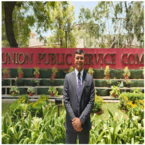
Raj Ujjwal - All India Rank 37 - Assistant Commandant Examination 2025
-
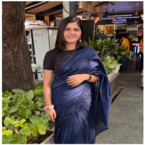
Surabhi Yadav - All India Rank 14 - UPSC Civil Services Examination, 2025
-
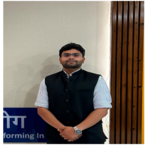
Utkarsh Yadav - All India Rank 32 - UPSC Civil Services Examination, 2025
-

Mansi Gupta - All India Rank - 78 - UPSC CSE 2025
-

Shambhavi Tiwari - All India Rank - 46 - UPSC CSE 2025
-
Deeksha Chourasiya - All India Rank - 44 - UPSC Civil Services Examination 2025
-
RUPAL JAISWAL - All India Rank 43 - UPSC Civil Services Examination, 2025
-
DIKSHA RAI - All India Rank 40 - UPSC Civil Services Examination 2025
-

Ananya Sharma - All India Rank – 37 - UPSC Civil Services Examination 2025
-

Zinnia Aurora - All India Rank – 6th - UPSC Civil Services Examination, 2025
