
Mahajanapada Era: Emergence of Early State Administration
Before the Mahajanapada era, ancient India's administrative system was based on smaller, tribal Janapadas, with authority vested in chiefs or rajans. Their power was limited by tribal councils like the Sabha and Samiti, and they relied on voluntary contributions rather than a formal tax system. The administration was decentralized, with loyalty focused on the clan rather than a fixed territory. This tribal polity contrasted sharply with the larger, more centralized states that would emerge during the Mahajanapada period.
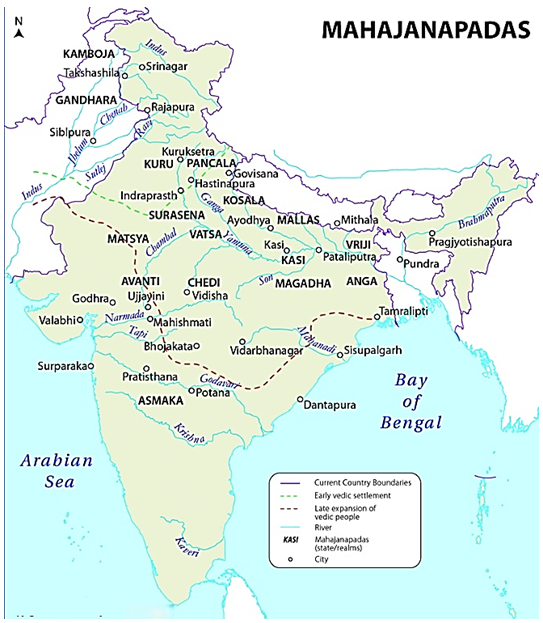
Key Administrative Features
- Executive
- Most Mahajanapadas were monarchies, ....
Do You Want to Read More?
Subscribe Now
To get access to detailed content
Already a Member? Login here
Take Annual Subscription and get the following Advantage
The annual members of the Civil Services Chronicle can read the monthly content of the magazine as well as the Chronicle magazine archives.
Readers can study all the material since 2018 of the Civil Services Chronicle monthly issue in the form of Chronicle magazine archives.
Indian History
- 1 Mughal Architecture, Music & Painting
- 2 Gupta Period: Classical Age of Art, Literature, Science & Architecture
- 3 Post-Mauryan Artistic Traditions
- 4 Temple-Building Traditions of Pallavas, Cholas & Hoysalas
- 5 Buddhist and Mural Paintings
- 6 Medieval Writers on Art and Culture
- 7 Literary Works of Medieval India
- 8 Classical Languages & their Status in Ancient India
- 9 Temple Architecture Styles
- 10 Rise and Decline of Artisan Industries in India
