
Role of Political Negotiations with Princely States
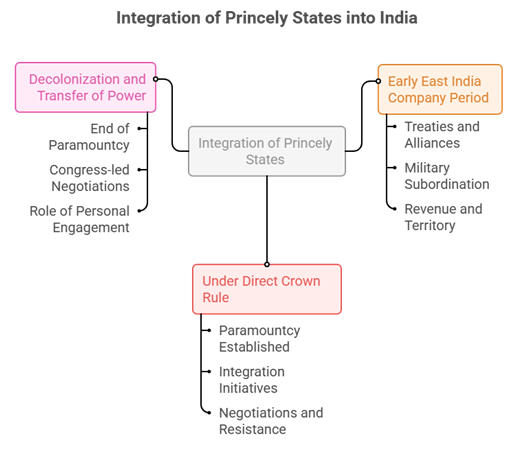
From the mid-18th century, the princely states—native kingdoms with internal autonomy but under British suzerainty—formed a vital component of British India’s political landscape. The British maintained control not only through military force but also via complex treaties, alliances, and negotiations with these rulers.
- Political negotiations with princely states were central to British imperial strategy, shaping the administrative structure, ensuring loyalty, and preserving stability across the subcontinent. The nature and tactics of these negotiations evolved significantly over two centuries, reflecting both British needs and the changing political climate in India.
Do You Want to Read More?
Subscribe Now
To get access to detailed content
Already a Member? Login here
Take Annual Subscription and get the following Advantage
The annual members of the Civil Services Chronicle can read the monthly content of the magazine as well as the Chronicle magazine archives.
Readers can study all the material since 2018 of the Civil Services Chronicle monthly issue in the form of Chronicle magazine archives.
Indian History
- 1 Mughal Architecture, Music & Painting
- 2 Gupta Period: Classical Age of Art, Literature, Science & Architecture
- 3 Post-Mauryan Artistic Traditions
- 4 Temple-Building Traditions of Pallavas, Cholas & Hoysalas
- 5 Buddhist and Mural Paintings
- 6 Medieval Writers on Art and Culture
- 7 Literary Works of Medieval India
- 8 Classical Languages & their Status in Ancient India
- 9 Temple Architecture Styles
- 10 Rise and Decline of Artisan Industries in India
